Deck Boards Cupping and Splintering in the Georgia Humidity? Why It Happens
July 17, 2026
How Georgia's Climate Creates Unique Demands on Porch Windows
Trusted Craftsmanship Behind Every Georgia Porch Window System
Georgia's climate demands materials built for real performance, not just visual appeal. Glass delivers unmatched longevity and optical clarity, with the tradeoff of weight and brittleness under direct impact. Vinyl offers moisture resistance and flexibility at a lighter weight, but requires quality UV inhibitors and properly engineered tracks to hold up under sustained heat. Acrylic brings impact resistance and light weight, but its susceptibility to scratching and UV yellowing limits its service life in full-sun Georgia exposures. The right choice depends on your porch orientation, how you use the space, and how long you intend to hold the investment.
For homeowners in Cumming, Georgia, that decision carries real weight. JT Deck And Porches has been building and enclosing porches in the North Georgia region for 38 years. We have watched how materials behave through Georgia summers, storm seasons, and the freeze-thaw cycles that catch homeowners off guard in late winter. Our recommendations are built on that accumulated field knowledge, not on product catalogs.
When we specify a
porch window system, we evaluate the structural load capacity of the existing deck, the orientation and sun exposure of the enclosure, the homeowner's intended use, and the long-term maintenance picture. We do not upsell material upgrades for their own sake. We recommend what we have seen hold up, and we stand behind that recommendation with 38
years of completed projects across Cumming and the surrounding communities.
The Heat and Humidity Combination
Georgia sits in a humid subtropical climate zone. Summers are long, hot, and saturated with moisture. Average summer temperatures in the Cumming and North Georgia region regularly exceed 90 degrees Fahrenheit, and relative humidity frequently climbs past 80 percent. That combination accelerates material degradation in ways that drier climates simply do not produce.
When a window panel absorbs heat, it expands. When temperatures drop overnight, it contracts. Over hundreds of cycles per year, this thermal movement stresses seals, frames, and the panel material itself. Materials that cannot flex with that movement will crack, warp, or delaminate. Georgia homeowners need window systems engineered to handle this range, not just marketed to handle it.
UV Radiation and Seasonal Storms
Beyond heat, Georgia receives intense UV radiation throughout a long outdoor season. UV exposure causes photodegradation in many polymers, which is the process by which molecular bonds break down under ultraviolet light. The visible result is yellowing, hazing, or brittleness in plastics and certain coatings. Storm season adds a separate mechanical challenge. Hail, wind-driven debris, and heavy rain test impact resistance and water sealing. A porch window system that fails under storm pressure creates interior water damage, frame rot, and mold risk inside the enclosure.
Acrylic scratches more easily than glass. Surface scratches diffuse light and reduce clarity over time, particularly in panels cleaned with abrasive products or rough materials. In a porch environment where panels are handled seasonally, stored, and reinstalled, scratch accumulation is a real concern.
More significantly for Georgia applications, acrylic yellows under prolonged UV exposure. Even UV-stabilized acrylic grades will show measurable yellowing over a decade of Georgia sun. Untreated or economy-grade acrylic yellows faster. Once yellowing begins, it cannot be reversed without panel replacement. For a permanent enclosure, this is a long-term durability liability that glass does not carry.
Quick Answer: Deck boards cup when one side of the board holds more moisture than the other. The underside stays damp while the sunlit top dries and shrinks, so the board curls into a shallow U with the edges rising. Splintering follows as the surface fibers weather and check. In a humid climate the usual drivers are poor airflow under the deck, boards that went down too wet, water trapped on top, and finish sealed on only one face. Fixing the moisture imbalance, not sanding the symptom, is what actually slows it down.
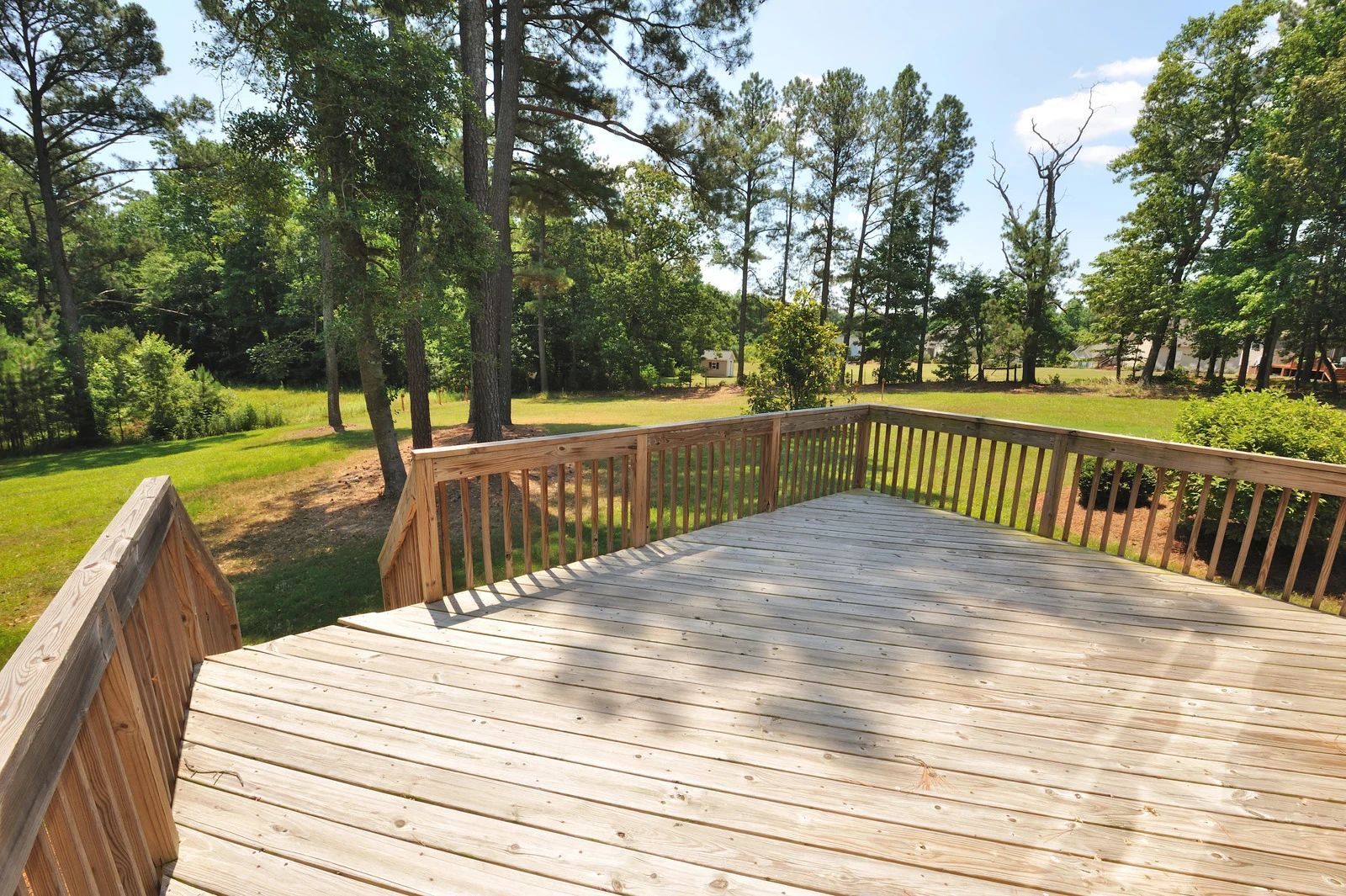
You walk out onto the deck barefoot on a July morning and something feels off. The boards that used to lie flat now curl up along their edges, holding little ribbons of water from last night's rain. Run a hand across the grain and it snags, throwing up hairline splinters that were not there a couple of seasons ago. The deck is not falling apart, but it is clearly moving, and in the thick North Georgia air it seems to get worse every summer.
That curling has a name. It is called cupping, and it is one of the most common things a wood deck does in a climate that swings between soaking humidity, hard afternoon sun, and pollen-choked springs. The splintering that comes with it is part of the same story. Neither is random, and neither is really about the wood being bad. Both trace back to one thing: moisture moving in and out of the boards unevenly. Once you understand why that happens, the fixes make a lot more sense, and so does the difference between a deck that shrugs off the humidity and one that fights it every year.
What Cupping Actually Is and Why the Edges Rise
The physics of a curling board. Wood is hygroscopic, which is a technical way of saying it constantly gains and loses moisture to match the air around it. Penn State Extension describes it plainly: wood keeps taking on or giving up moisture until it reaches equilibrium with its surroundings, and it starts to shrink once its moisture content drops below roughly 30 percent. When the two faces of a single board sit at different moisture levels, they change size at different rates, and the board has no choice but to bend.
On a deck that plays out in a very specific way. The top face bakes in the sun and dries out, so its surface fibers shrink. The underside sits in shade over damp ground or a poorly ventilated cavity, so it stays swollen. Brazilian Wood Depot describes the same mechanism: sunlight pulls moisture out of the top while trapped moisture keeps the underside expanded, and that difference forces the board to cup upward with the edges lifting above the center. Tanzite's breakdown of the problem calls it exactly that, a shallow U where the edges rise and the middle dips, and notes that it creates puddles, wobbles furniture, and raises the splinter risk.
That last point matters in Georgia. Our air does not sit still at one humidity level. Penn State notes that outdoor wood swings through a seasonal equilibrium moisture content in the neighborhood of 11 to 14 percent, and the same source shows how sensitive that is to the air: at 70 degrees, wood settles near 7.7 percent moisture at 40 percent humidity but climbs to nearly 15 percent at 77 percent humidity. A deck here lives at the high, damp end of that range for months, then dries hard in the sun. Every one of those swings is another cycle of the top and bottom moving out of step.
Why the Humidity Here Makes It Worse
A climate built for wood movement. The reason a deck cups more in metro Atlanta than in a dry western state is that our conditions attack the board from both directions at once. The humidity keeps the underside loaded with moisture. The heat and sun dry the top aggressively. Wooded lots common around Cumming, Dawsonville, and the north side of the metro make it worse, because tree cover keeps the ground beneath the deck shaded and slow to dry, and leaf debris piles up in the framing and holds water against the boards.
Then there is the spring pollen. That yellow film everyone knows works like a sponge in the gaps between boards, trapping moisture and organic matter right where water needs to drain and air needs to move. Add the summer thunderstorms that soak everything and then a sun that comes out an hour later, and you have a soak-and-dry rhythm that is close to worst case for keeping a board flat. None of this means wood is the wrong choice here. It means a wood deck in this climate has to be built and maintained with moisture movement in mind, because the climate is going to test it.
Tip: To tell cupping apart from a framing problem, sight down each board across its width. If individual boards are curling into a U along their width, that is cupping and it is a moisture issue. If a whole section dips or feels soft between the joists, that points to framing or fasteners instead, and no amount of surface work will fix it.
Where the Splintering Comes From
Surface checking and weathering
Splintering is the other half of what the humidity does to an untreated or under-maintained wood surface. As the top face repeatedly wets and dries, the fibers on the surface expand and contract and eventually separate, forming the fine cracks called checking. Over time those raised fibers become the splinters you feel underfoot. Cupping speeds it along, because the raised edges of a cupped board take more sun, more wear, and more standing water than a flat surface would, so they rough up and check first.
There is a compounding problem, too. Once a board cups and holds water in its dished center or along its lifted edges, that trapped moisture keeps feeding the wet-dry cycle that causes checking. So cupping and splintering are not two separate defects; they are two symptoms of the same moisture imbalance feeding on each other. That is why sanding splinters off every spring rarely holds. It smooths the surface for a season, but if the board is still cupped and still cycling through moisture, the roughness comes right back.
Warning: Do not count on sanding or a fresh coat of stain to reverse severe cupping. Sanding can knock down sharp splinters and a proper finish slows further checking, but neither one flattens a board that has already curled or fixes the moisture imbalance underneath it. Boards that cup badly enough to pond water, lift fasteners, or crack are usually past saving and need to be replaced, with the underlying airflow and drainage corrected so the replacements do not do the same thing.
What Actually Slows It Down
Fixing the imbalance instead of the symptom. Because cupping is a moisture problem, the durable fixes all target moisture rather than the surface. The first move is airflow. Clearing debris out from under the deck, opening up solid skirting, and keeping vegetation back from the perimeter all let the underside dry so it stops fighting the top. AdvantageLumber recommends keeping shrubs and mulch at least 12 inches off the structure and, for low decks, laying gravel and a vapor barrier such as 6-mil plastic over the soil to cut the moisture rising from the ground.
Drainage on top matters just as much. Board gaps need to stay open so water runs off and air moves through; TimberTech and AdvantageLumber both put proper side-to-side spacing in the range of about 1/8 to 3/16 of an inch for wood, which is enough to drain and ventilate without swallowing debris. That means keeping those gaps clear of pollen and leaves, sloping the frame so water sheds instead of ponding, and getting planters up on feet so they are not trapping a wet footprint on the boards. When the finish is part of the problem, the fix is to strip a failing one-sided coating and refinish so every exposed face is protected evenly. Done together, these steps stop most boards from getting worse, and mildly cupped boards can even relax somewhat once the moisture on both faces evens out.
Material choice sets the ceiling on all of this. Composite and PVC do not cup the way wood does because they are far less hygroscopic, though AdvantageLumber notes they still need ventilation and correct gapping to manage heat and moisture. A wood deck can absolutely thrive in this climate, but it rewards attention to the details that keep both faces of every board drying at the same rate.
Frequently Asked Questions
Why do my deck boards cup more in summer than winter?
Deck boards cup more during summer because humid air adds moisture underneath while sunlight dries the top surface. This moisture imbalance causes wood fibers to expand unevenly, creating curling, raised edges, splinters, and surface distortion over time.
Can cupped deck boards go back to flat?
Mildly cupped boards may flatten somewhat after improving drainage and airflow, allowing moisture levels to equalize. Severely cupped boards rarely return completely flat and usually require replacement alongside correcting the underlying moisture problem for lasting results.
Is cupping a sign my deck is unsafe?
Cupping alone does not always make a deck unsafe, but raised edges, splinters, trapped water, loose fasteners, and cracking boards increase slipping and tripping hazards. Professional evaluation helps identify structural concerns before conditions become significantly worse.
Will staining or sealing stop the splinters?
Applying stain or sealer helps reduce moisture cycling and surface checking, but it cannot stop splinters if boards continue cupping. Lasting improvement requires correcting drainage, airflow, and moisture issues causing the wood movement beneath the finish layers.
Does keeping the deck clean really matter for cupping?
Yes, regular deck cleaning removes leaves, pollen, and debris that trap moisture around boards and framing. Keeping drainage paths clear improves airflow beneath the deck, reducing prolonged moisture exposure that contributes to cupping and long-term wood damage.
Would composite decking avoid this problem?
Composite decking resists moisture better than wood, making cupping and splintering far less common. However, proper installation, drainage, ventilation, and ground clearance remain essential for long-lasting performance and preventing heat-related movement or water retention beneath.
Living With Wood in a Humid Climate
Cupping and splintering are not signs that a wood deck was a mistake. They are what wood does when one face stays wetter than the other, and in a climate that pairs heavy humidity with hard sun and a wooded, pollen-heavy spring, that imbalance is always trying to happen. The boards curl because the underside cannot dry as fast as the top, and the surface roughens because it cycles through wet and dry until the fibers check. Every real fix, from opening up airflow to keeping the gaps clear to finishing all sides evenly, comes back to the same idea: keep both faces of the board drying at the same rate, and the wood will lie flat and stay smooth far longer.
Have a
cupping deck evaluated
— When boards are curling and throwing splinters, the boards themselves are usually the last symptom, and the real story is airflow, drainage, and how the deck was built for this climate. With 38+ years of experience, JT Deck And Porches
evaluates the entire system, including the clearance under the deck, skirting and ventilation, board gaps and slope, framing, and fasteners to determine why moisture is becoming trapped. Proudly serving Cumming, Georgia, we recommend lasting solutions that stand up to humid summers. Schedule an assessment before another season of curling boards and yearly sanding, and get a deck built to stay flat and smooth.