Want to Use the Porch Year Round in North Georgia? How Porch Windows Make It Work
November 14, 2026
How Georgia's Climate Creates Unique Demands on Porch Windows
Trusted Craftsmanship Behind Every Georgia Porch Window System
Georgia's climate demands materials built for real performance, not just visual appeal. Glass delivers unmatched longevity and optical clarity, with the tradeoff of weight and brittleness under direct impact. Vinyl offers moisture resistance and flexibility at a lighter weight, but requires quality UV inhibitors and properly engineered tracks to hold up under sustained heat. Acrylic brings impact resistance and light weight, but its susceptibility to scratching and UV yellowing limits its service life in full-sun Georgia exposures. The right choice depends on your porch orientation, how you use the space, and how long you intend to hold the investment.
For homeowners in Cumming, Georgia, that decision carries real weight. JT Deck And Porches has been building and enclosing porches in the North Georgia region for 38 years. We have watched how materials behave through Georgia summers, storm seasons, and the freeze-thaw cycles that catch homeowners off guard in late winter. Our recommendations are built on that accumulated field knowledge, not on product catalogs.
When we specify a
porch window system, we evaluate the structural load capacity of the existing deck, the orientation and sun exposure of the enclosure, the homeowner's intended use, and the long-term maintenance picture. We do not upsell material upgrades for their own sake. We recommend what we have seen hold up, and we stand behind that recommendation with 38
years of completed projects across Cumming and the surrounding communities.
The Heat and Humidity Combination
Georgia sits in a humid subtropical climate zone. Summers are long, hot, and saturated with moisture. Average summer temperatures in the Cumming and North Georgia region regularly exceed 90 degrees Fahrenheit, and relative humidity frequently climbs past 80 percent. That combination accelerates material degradation in ways that drier climates simply do not produce.
When a window panel absorbs heat, it expands. When temperatures drop overnight, it contracts. Over hundreds of cycles per year, this thermal movement stresses seals, frames, and the panel material itself. Materials that cannot flex with that movement will crack, warp, or delaminate. Georgia homeowners need window systems engineered to handle this range, not just marketed to handle it.
UV Radiation and Seasonal Storms
Beyond heat, Georgia receives intense UV radiation throughout a long outdoor season. UV exposure causes photodegradation in many polymers, which is the process by which molecular bonds break down under ultraviolet light. The visible result is yellowing, hazing, or brittleness in plastics and certain coatings. Storm season adds a separate mechanical challenge. Hail, wind-driven debris, and heavy rain test impact resistance and water sealing. A porch window system that fails under storm pressure creates interior water damage, frame rot, and mold risk inside the enclosure.
Acrylic scratches more easily than glass. Surface scratches diffuse light and reduce clarity over time, particularly in panels cleaned with abrasive products or rough materials. In a porch environment where panels are handled seasonally, stored, and reinstalled, scratch accumulation is a real concern.
More significantly for Georgia applications, acrylic yellows under prolonged UV exposure. Even UV-stabilized acrylic grades will show measurable yellowing over a decade of Georgia sun. Untreated or economy-grade acrylic yellows faster. Once yellowing begins, it cannot be reversed without panel replacement. For a permanent enclosure, this is a long-term durability liability that glass does not carry.
Not every framing issue means starting over. If the joists themselves are structurally sound but under-spanned or missing blocking, sistering, which means fastening a new joist alongside the existing one to add strength, is often enough to eliminate bounce without touching the deck surface. The same goes for reinforcing a ledger connection with additional structural fasteners or adding blocking that was never installed in the first place. These are targeted fixes that address the actual cause instead of masking the symptom.
A rebuild becomes the right call when the underlying wood has decayed, when several framing members show the same failure at once, or when the original design simply wasn't built for the span and load it's carrying today. There's no shortcut around a hands-on inspection. It's the only reliable way to know if you're facing a focused repair or a more involved project.
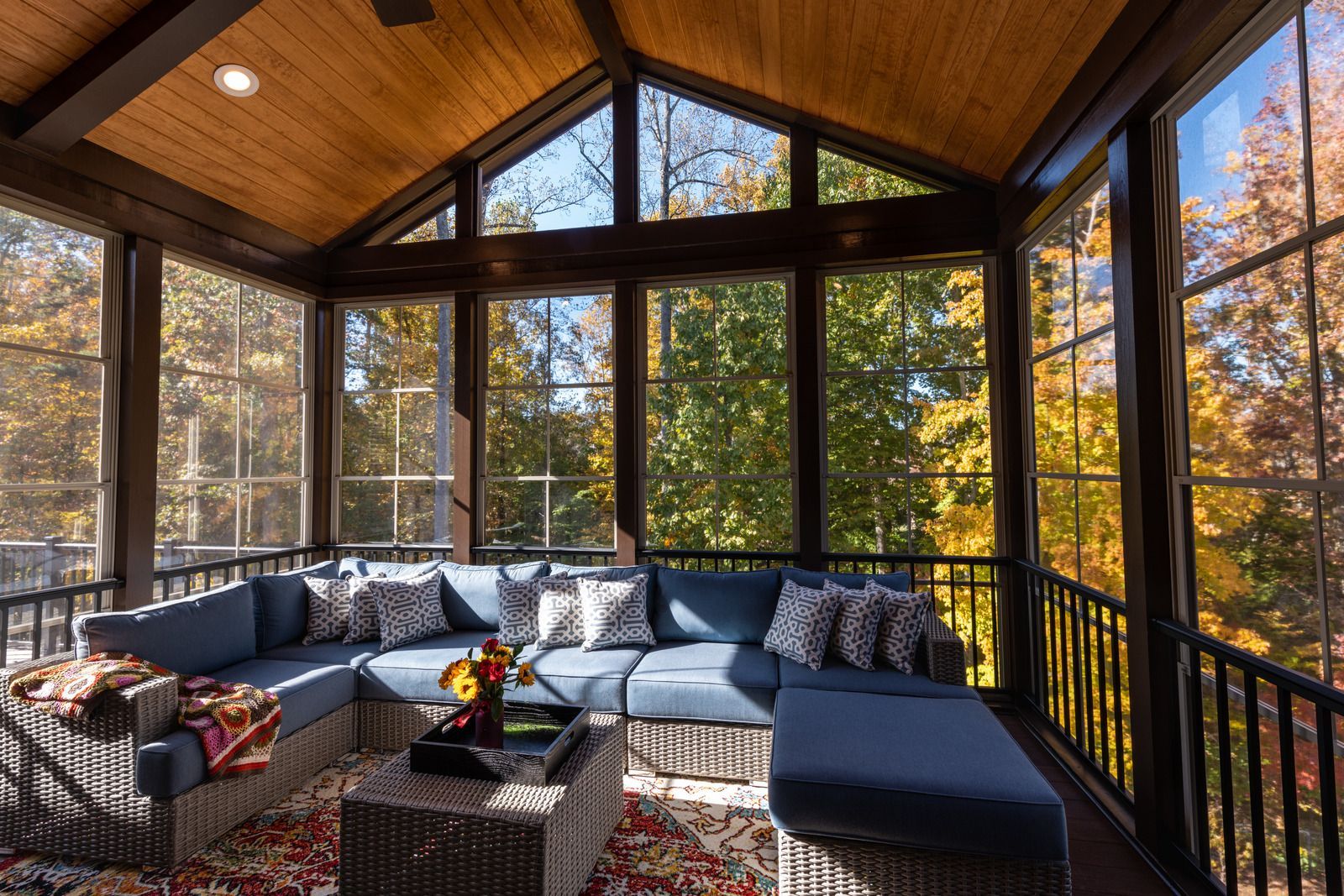
Quick Answer: Porch windows make a porch usable for most of the year in North Georgia by blocking wind, rain, pollen, and cold drafts while keeping the view and the daylight. A window enclosed porch is usually a three season space, comfortable from early spring through late fall and on many mild winter days. Turning it into a true four season room takes more than glass, because it also needs insulation, a tight envelope, and a plan for heating and cooling. The result depends on how the windows are framed into the porch structure, how they open for ventilation, and how well the floor and roof are prepared to carry them.
It is a Saturday morning in late November. The coffee is hot, the sun is finally low and gentle, and the porch is the place you most want to be. But the wind is cutting across the yard, the cushions feel damp, and a thin film of pollen and leaf dust has settled on everything. You carry your mug back inside and watch the porch through the kitchen window, empty again. It was supposed to be the favorite room of the house, and for a good part of the year it sits unused.
That pattern is common across Cumming, Alpharetta, and the rest of the north metro Atlanta area. A porch earns its keep in May and September, then goes quiet when the weather turns damp, windy, or chilly. Porch windows change that. They do not turn the porch into a different room, but they extend the number of days you can sit out there in comfort. This article explains how that works, what to expect, and what has to be built right for it to last.
Why a Porch Goes Unused for Half the Year
Most porches fail the same way. They are open to everything the weather throws at them. In North Georgia that means humid heat in summer, heavy afternoon downpours, a long and sneezy pollen season in spring, and wet, windy stretches in late fall and winter. Even a roofed porch does little against rain that blows in sideways or a cold breeze that finds every seat.
Screens help with bugs and a little shade, but they do nothing about temperature, rain, or fine pollen. A screened porch is a fine summer room. A porch with windows is a different tool, one designed to hold the weather out while still letting you see the yard, the trees, and the sky.
Winters here are not harsh compared with colder parts of the country, and that works in your favor. Mornings and evenings can run cold, but many winter afternoons are mild, especially in the sun. A porch that blocks the wind and catches the low winter sunlight can feel several degrees warmer than the open air, which is often the difference between sitting outside and staying in.
What Porch Windows Actually Do
A good set of porch windows does a handful of jobs at once, and it helps to separate them.
They Stop The Wind
Enclosing a porch blocks cold wind and reduces drafts. Still air feels noticeably more comfortable, even when outdoor temperatures remain low.
They Keep Rain And Pollen Out
Windows protect furniture and floors from spring pollen and rain while allowing you to enjoy fresh air on pleasant days.
They Hold In Sun Warmth
Glass allows winter sunlight to warm the porch, creating a comfortable sitting area on clear days despite cooler outdoor temperatures.
They Protect What You Own
Windows shield cushions, rugs, books, and furniture from humidity and driving rain. Wood furniture especially benefits from reduced moisture exposure.
They Keep The View
Large glass panels preserve the outdoor connection that makes porches enjoyable. You gain weather protection without replacing the view with solid walls.
Three Season Versus Four Season: Setting Honest Expectations
This is the part worth understanding before you plan anything. A porch with windows is usually a three season space. It handles spring, summer, and fall comfortably, and it gives you a good share of mild winter days. What it does not do on its own is stay warm on a freezing night.
A true four season room is a different build. It needs insulation in the walls, floor, and ceiling, higher performance glass, a tightly sealed envelope, and a way to heat and cool the space, which often means extending the home's system or adding a dedicated unit. That is closer to building an addition than to adding windows to a porch.
Many homeowners in North Georgia are very happy with the three season result, because our climate does most of the work. The goal for most people is not a room that stays seventy degrees in a January ice storm. It is a porch they can use on a cool, bright morning, a breezy fall evening, or a rainy afternoon in March. Porch windows get you there. If you want something beyond that, it is better to say so at the start, so the framing, the floor, and the roof are planned for it.
Tip: Decide how you want to use the porch before choosing anything else. If you picture morning coffee and quiet evenings across most of the year, a window enclosed three season porch fits well. If you picture a room you could work in on any day of the year, plan for a more complete build from the first conversation.
Window Styles and How They Change the Way You Use the Space
The style of window you choose matters as much as the glass itself, because it decides how flexible the porch feels.
Sliding And Stacking Panels
These panels open large wall sections during pleasant weather and close them when conditions change. They offer flexibility for enjoying an open porch or sheltered room.
Single Or Double Hung Windows
These windows create a traditional appearance that matches the rest of the house. They open partially and suit porches designed as interior extensions.
Fixed Panels Paired With Operable Sections
Large fixed panels preserve views, while smaller operable windows provide ventilation. This arrangement offers plenty of glass without requiring every section to open.
Glass With Screen Panels
Close the glass during cooler seasons and slide it open during warmer months. Screens provide ventilation while keeping the porch comfortable and usable.
Whichever style fits your home, the frames matter. Frames that hold up to humidity and sun will keep opening and closing smoothly for years. Frames that swell, stick, or let moisture in turn a good idea into a chore.
Ventilation Matters More Than People Expect
It sounds odd, but a porch with windows needs a plan for fresh air. A sealed glass room in the Georgia sun can warm up quickly, even on a cool day, and in summer it can become uncomfortable if there is no way to move air through it.
That is why operable windows, screen sections, and a ceiling fan are not extras. They are part of the design. Windows that open on opposite sides let a breeze run through. A ceiling fan keeps the air moving when it is still. And shade from the roof overhang, trees, or window coverings keeps the afternoon sun from turning the porch into a greenhouse.
Humidity is the other half of the story. Georgia air carries a lot of moisture, and a closed room that never moves air can hold it. Good airflow and a roof and floor that shed water properly keep the space fresh and protect the wood from the slow damage that moisture causes.
What the Porch Structure Has to Do First
Windows are only as good as the porch they sit on. This is where experience shows, and where the shortcuts hide.
A window wall is heavier and stiffer than a screen wall, and it needs framing that is square, plumb, and solid. If the floor has settled, the posts have shifted, or the beam above has begun to sag, the windows will bind, leak, or refuse to close. Rot at the base of a post or along the bottom plate will not stay hidden for long once glass is set against it.
Water is the main enemy. The sill, the flashing, and the way the roof sheds rain all decide whether the window wall stays dry. A porch that has always been open can tolerate small leaks, because everything dries out. Once it is enclosed, a small leak stays in the wall and rots it quietly.
Warning: Do not put windows on a porch with soft floor boards, leaning posts, or a sagging roofline. Glass will not hide those problems, and an enclosed wall traps moisture against weak wood. Repair the structure first, then add the windows.
After 38 years of building and repairing porches around Cumming, Suwanee, and Buford, we have learned that the best window installations start with a close look at the porch itself. On wooded lots, where shade and leaf litter keep wood damp, that look matters even more.
Planning Furniture, Light, and Use Before the Build
A porch that works all year is planned like a room. Think about where the seating will go, where the door swings, and which wall gets the best light. Windows placed to catch the low southern sun in winter make the space brighter and warmer. Windows placed to frame a favorite view make it a place people want to sit.
Think about the floor as well. A surface that handles moisture and cleans easily suits a room that stays in use through all kinds of weather. Think about lighting and outlets, because a porch you enjoy in the evening needs both. These details are far easier to plan while the porch is being built or upgraded than after the windows are in.
If your porch is also connected to a deck, consider how the two work together. A deck that steps out from a window enclosed porch lets you move between a sheltered room and open air as the day and the season change, which is often the best of both.
Frequently Asked Questions
Will porch windows make my porch warm enough to use in winter?
They make it noticeably more comfortable by blocking wind and capturing sun, and on many mild North Georgia days that is enough. A window enclosed porch is not insulated like a heated room, so it will still be cool on the coldest nights and mornings.
What is the difference between a window enclosed porch and a sunroom?
A sunroom is usually built as a fully insulated room with its own heating and cooling. A window enclosed porch adds glass to an existing porch structure and is typically used for three seasons. The right choice depends on how you plan to use the space.
Can I still open the porch up in summer?
Yes. Sliding, stacking, and operable windows with screen sections let you open most of the wall on warm days and close it when the weather turns. Good ventilation also keeps the room from overheating.
Will windows trap moisture and cause rot?
Not when the porch is built and sealed correctly. Proper flashing, a roof that sheds water well, sound framing, and airflow keep the space dry. Problems usually come from adding windows to a porch that already has hidden water damage.
Do I need to repair my porch before adding windows?
If the floor, posts, beam, or roof show signs of rot, sagging, or movement, yes. Windows need a solid, square structure to open and close properly and to stay weathertight.
How do porch windows affect pollen in the spring?
They keep most of it out of the space. Closed windows protect your furniture and floor from the heavy yellow coat that settles across North Georgia each spring, and you can open them when you want fresh air.
Reach for the Porch in Every Season
A porch should be a room you reach for in every season, not just the three months when the weather behaves. Porch windows get you most of the way there, blocking the wind, rain, and spring pollen while holding the view and the daylight you built the porch for in the first place. The honest expectation is a three season space, comfortable from early spring through late fall and on many mild winter afternoons, when North Georgia’s climate does much of the work for you.
What makes it last is everything beneath the glass, a square, sound structure, proper flashing, and a real plan for air and light. JT Deck And Porches
has spent 38+ years building and upgrading porches around Cumming, GA, where shade and damp ground test every post and sill. A porch you use most of the year is rarely luck. It comes from repairing the structure first, choosing windows that open the way you live, and planning the space before the first cold, windy stretch arrives.